
A Beginner's Guide To Incense
Understanding the enchanting world of Incense.
नमस्कार!
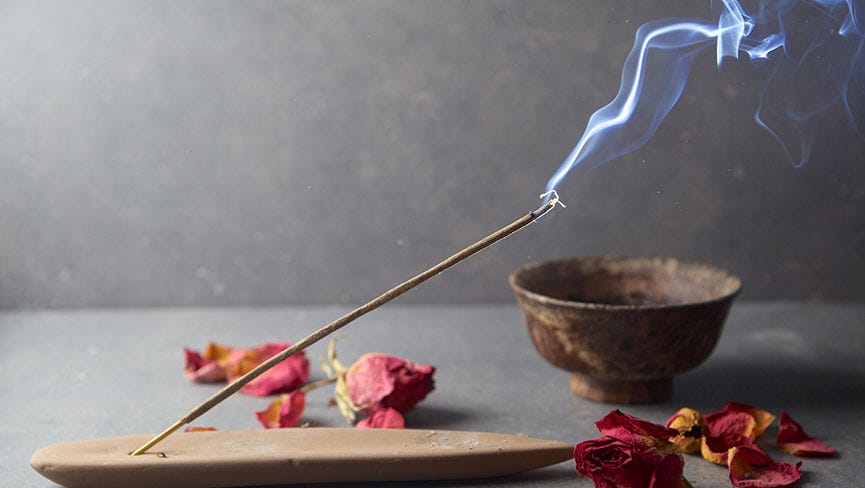
Incense or agarbatti refers to a substance that is burned to produce aromatic smoke, often for spiritual, religious, or therapeutic purposes. The term encompasses a wide variety of materials, including natural plant materials, resins, and synthetic fragrances. This article examines the history, types, and various uses of incense, offering a comprehensive overview of its significance.
✦ Historical roots and cultural significance of incense:
The use of incense dates back to ancient civilizations, where it played a central role in religious and ceremonial practices. Archaeological evidence suggests that the Egyptians were among the first to use incense, offering aromatic resins such as frankincense and myrrh to deities and in funerary rites. These early practices spread through the Mediterranean and beyond, influencing cultures across the globe.
The Indian subcontinent also has a long history with incense, deeply intertwined with Hindu and Buddhist practices. In India, incense is known as "agarbatti" and is used in rituals and meditation to create a serene atmosphere. Traditional Indian incense often incorporates a wide range of natural materials, including herbs, resins, and essential oils.
In India, the use of agarbatti dates back over more than 2,000 years, where it became intertwined with Hindu rituals, Buddhism, and various local customs. Each region adopted unique blends of fragrances, reflecting local flora and traditions.
✦ Uses of incense sticks:
Incense has diverse applications across different domains:
Spiritual Practices: In many religious and spiritual contexts, incense is burned to purify the air, set the mood for prayer and meditation, or enhance the atmosphere during rituals.
Aromatherapy: Different scents can have therapeutic effects, influencing mood, reducing stress, or promoting relaxation and focus.
Cultural Traditions: Many cultures incorporate incense into their everyday life. For example, it is common to light incense during festivals, ceremonies, or social gatherings.
Home Fragrance: Incense is often used as a means of creating a pleasant aroma in living spaces, masking unwanted smells, or promoting a welcoming ambiance.
✦ Types of incense:
There are several forms of incense, which can be categorized based on their composition and method of use:
Incense Sticks (Agarbatti):
Composed of a thin bamboo stick coated with a mixture of aromatic materials and binders.
Widely used in many cultures, especially in India and Southeast Asia.
Cones (Dhoopbatti):
Made by molding incense powder into a cone shape.
They burn more slowly than sticks, providing a longer-lasting fragrance.
Loose Incense:
A blend of aromatic substances that can be burned on charcoal disks or in specialized incense burners.
This form allows for a greater variety of scents and combinations.
Resins:
Natural tree resins like frankincense and myrrh that are often burned directly or used as a component in other types of incense.
Known for their rich historical significance, especially in religious contexts.
Powdered Incense:
Ground plant materials that can be used in various applications, such as in rituals or craft projects.
✦ Benefits of incense:
Incense sticks offer several health benefits, making them a delightful addition to your daily routine. Here are some of the benefits:
Incense sticks are burned to cleanse or purify the air around us, and to ward off bad energy. They are natural air fresheners.
It helps create a perfect ambience required for any religious ceremony or rituals.
Incense are effective organic insect repellents.
It’s aroma has many therapeutic benefits for the human mind and the pleasant scent helps you relax your mind and forget all the worries that are troubling you.
The fragrant fumes seep into your exterior and interior and gently nudge you into a realm of heightened focus, serenity, and awaken your consciousness. This makes your surrounding conducive for yoga and meditation.
✦ The Takeaway:
Incense is more than just a pleasant fragrance; it is a cultural artifact and a bridge to the past. Its ability to evoke memories, create ambiance, and enhance spiritual practices speaks to its enduring relevance. Whether you are drawn to its historical significance, its role in cultural rituals, or its modern applications, incense remains a captivating element of human experience, continually adapting while honoring its rich heritage.
Hare Krishna🌺
I love incense ❤️